Find a friend.
Find the space.
One connected story: a blocked choice, Maya’s help, a supported retry, then the child’s turn. The cast reference and four-screen player are built. The ending connects adult-led ball practice with the interactive passing game. The cinematic story remains unfinished.
Updated cast and stadium frame · film unfinishedThe new still shows the detailed cartoon tutorial cast in a realistic Toronto stadium. The first layout attempt was rejected; one targeted correction produced the frame below. Runway returned a failed status for the 24-second treatment, with no video output and no detailed failure reason. It was not automatically retried. A completed cinematic lesson and qualified coaching review remain outstanding.
Existing-credit production is authorised without per-item approval. This production update used 28 credits for two frame generations. The failed video initially deducted 672; the current account balance has since increased by exactly 672, consistent with reversal of that deduction. A separate refund transaction has not been inspected. No purchases, top-ups or automatic retries. Earlier rejected videos remain withheld.
Open the connected lesson review →
GENERATED STILL · VISUALLY CHECKED FOR PRODUCTIONMaya and the team in Toronto.
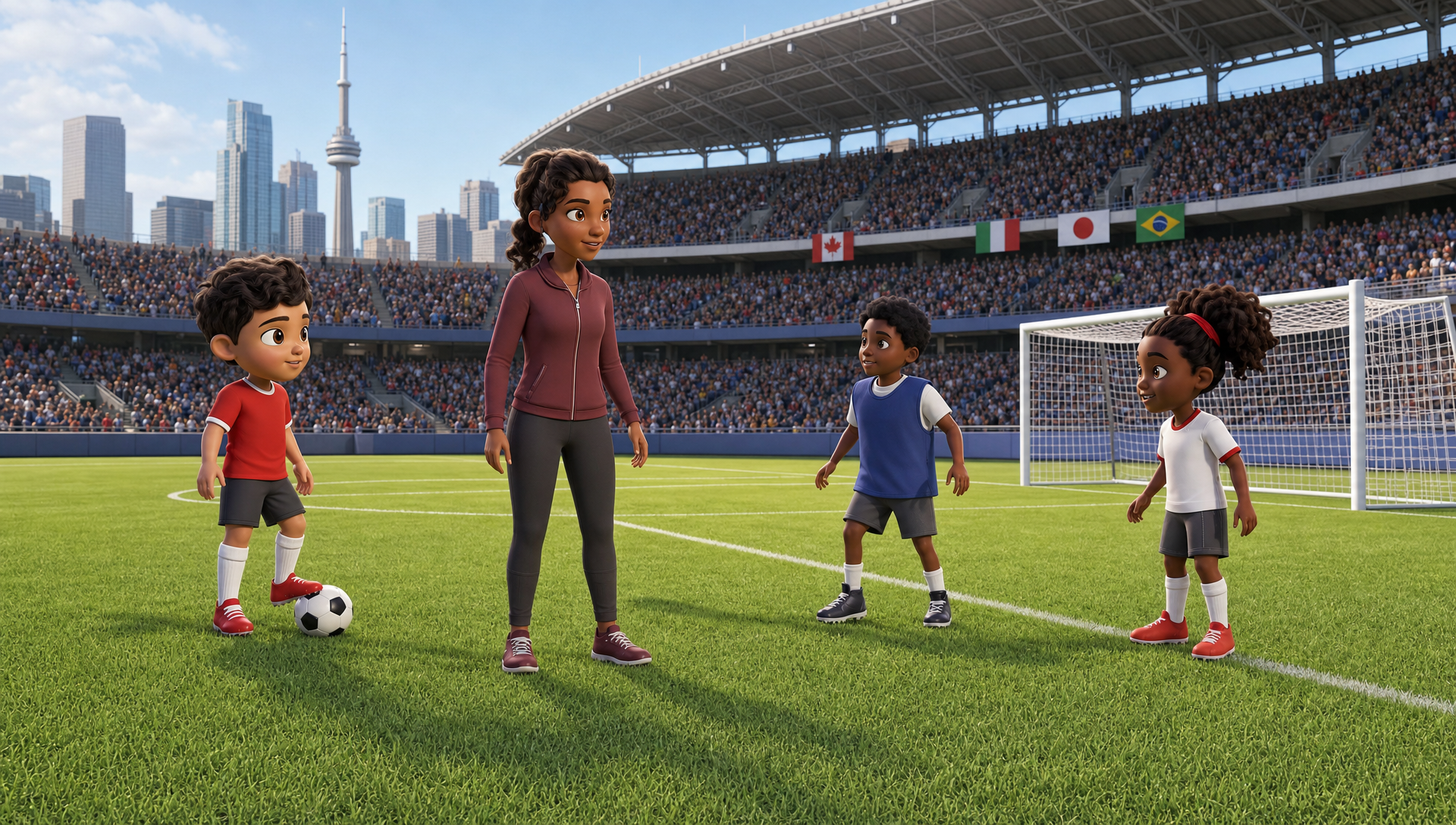
This is tutorial keyframe artwork. It is not a rigged game model, a completed animation or approved technical instruction. Gameplay is planned to use lifelike players; tutorials keep this detailed cartoon cast.
Visual check: four complete figures, one ball, upright adult coach, grounded feet, clear stadium structure and recognisable national flags. The ball is resting under Elisio’s boot; the later passing contact must be checked in the generated motion. Fine flag details and final motion remain subject to review.
Open the full frame →Production method
Retain the browser 3D game for responsive controls and separate learning progress. Replace procedural development actors with proper rigged character assets and tested movement clips. Use Runway exclusively for AI-generated imagery, stories, demonstrations and voice where supported. A generated still is not a rigged model.
The current prompt-led animation attempts did not provide reliable instructional movement. The proposed next method is an accurate, controlled motion source followed by Runway visual treatment and frame-level review. The 24-second controlled source was authored, mechanically checked and submitted for visual treatment; the treatment failed without producing a video. Those checks do not establish natural biomechanics or qualified coaching approval. No further automatic variants are queued. Technical footage stays out of child instruction until visual checks and qualified coaching review pass.
The cast stays together.
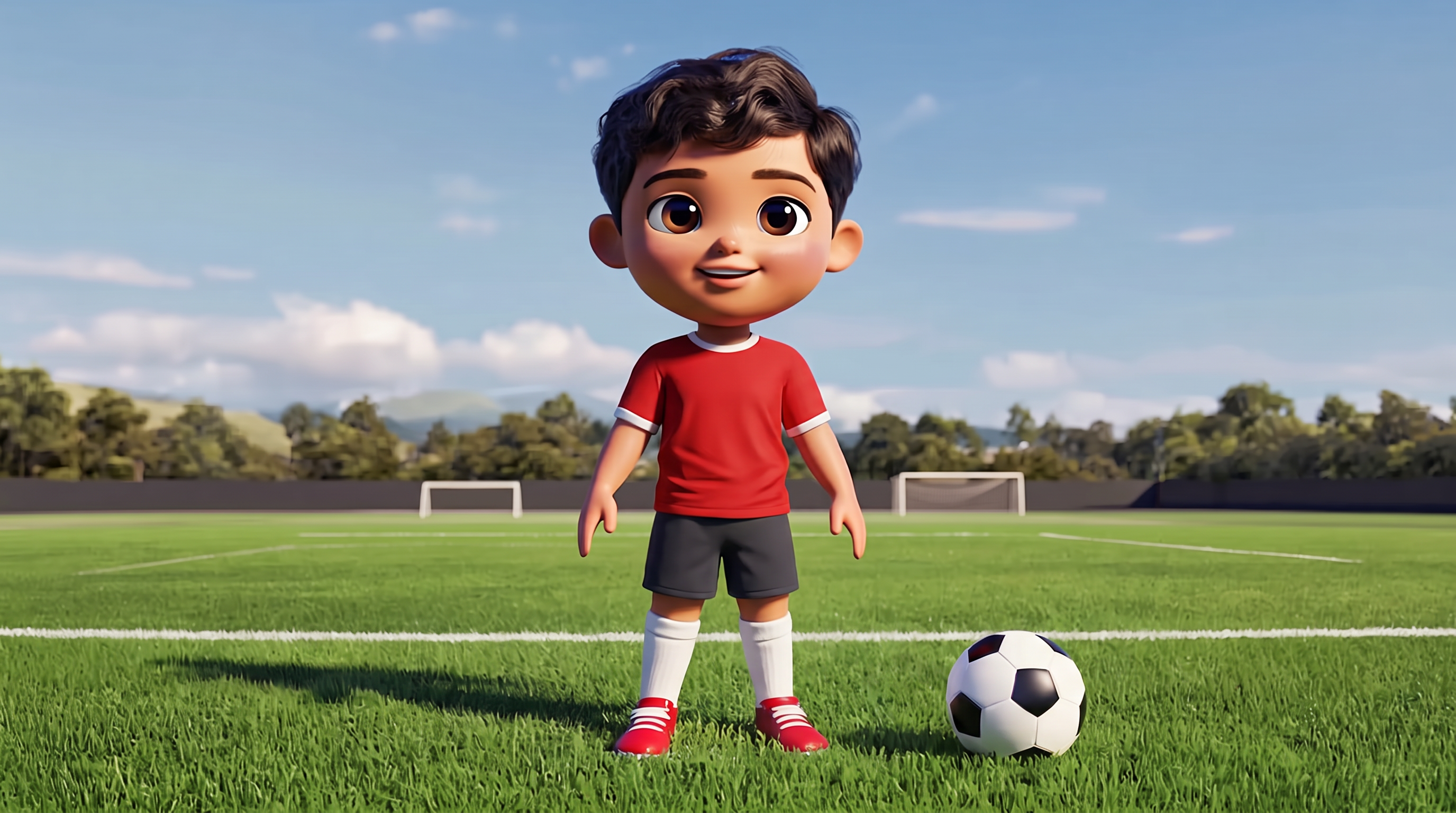
Elisio · Preserve this face, hair, proportions and plain red-and-white kit. Italian character.
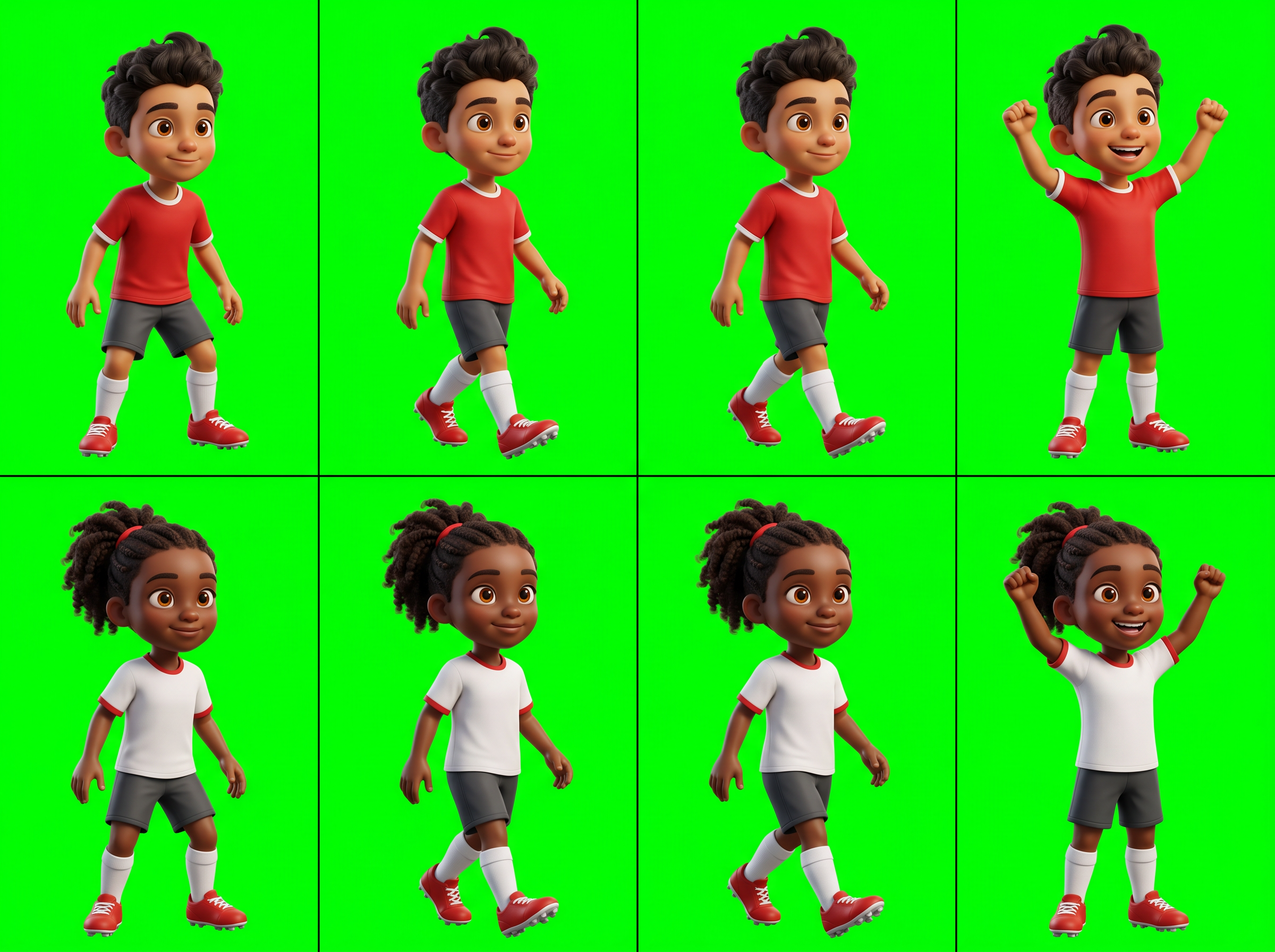
Zoe · Use the girl on the second row as the identity reference. Preserve textured ponytail and kit.
Coach Maya — proposed new visual design. Adult woman, warm brown skin, tied-back dark curls, burgundy training jacket and charcoal trousers. Supportive posture, coaching at the players’ eye level. The shared reference proposes Maya’s visual design; no approved rigged Maya model exists yet.
A fourth child in a blue bib makes the blocked route visible. Teo’s Italian identity and Leo’s tanned complexion remain unchanged; they are not added merely to crowd this lesson.
The connected story.
SCENE 1 · GENERATED · REJECTEDThat way is blocked.
The intended scene shows Elisio pass into a route intercepted by the blue-bib player. Maya and Zoe stay visible; the mistake is treated calmly.
The generated attempt changed ball scale and did not complete the intended interception. A correct demonstration remains unfinished.
SCENE 2 · GENERATED · REJECTEDLook for space.
Maya moves to the children's eye level and points along the open middle route. Both players look toward that space. The ball stays stationary.
Both outputs failed ball-continuity checks. A usable coaching demonstration remains unfinished.
SCENE 3 · GENERATED · WITHHELDTry again together.
In a stable wide shot Elisio makes one gentle inside-foot ground pass; visible contact precedes ball movement. Zoe receives with controlled contact. Zoe leads a gentle return pass.
The generated exchange is more coherent, but does not show the intended inside-foot technique and Maya leaves the frame. It is withheld; qualified coaching review has not taken place.
CHILD’S TURN · INTERACTIVE WEBSITEPractise with a ball. Play in the app.
Two clear choices end the story. The app opens the passing mission with a blocked route, visible prototype correction and a supported retry. The home activity provides a visual setup guide, a gentle pass, one helpful change and a role swap. No timer; no requirement to complete one path before the other.
Open the four-step ball practice → · Open the passing game →
Home observations are temporary and separate from game stickers. No physical mastery is inferred.
Continuity and release checks.
- Same characters, kits, ball, Toronto pitch, daylight and left-to-right geography.
- Show full bodies and feet. No crop on mobile; keep captions outside the action.
- Reject identity drift, disappearing balls, foot sliding, contact errors and impossible movement.
- Technical footage remains outside the child lesson until qualified coaching review is recorded.
- Existing recorded Maya audio may be reused only with its exact transcript. New dialogue is not implied to be recorded.
- Videos are prerecorded stories. Responsive characters require genuine rigged game assets, which remain unfinished.
Current motion source: four six-second scenes covering the blocked pass, Maya’s demonstration, Elisio’s retry and Zoe’s return. Actual accepted duration will depend on visual and qualified review. All current outputs are withheld from the intended instruction; no complete film is ready for children. No school-curriculum alignment, official endorsement or guaranteed outcome is claimed.
Open the connected lesson review →
Production method: Runway’s image-to-video guidance uses the reference image to establish the scene and the prompt to direct movement. Generated movement still needs frame-level review.